When persistent back pain, muscle knots, or athletic tightness does not respond to stretching alone, needle-based treatments can become an option. Two commonly discussed approaches are dry needling and traditional acupuncture. Although both use thin, sterile needles without injecting medication, they are based on different clinical frameworks and are used with different treatment goals.
For patients asking dry needling vs acupuncture for back pain, there is no universal winner. Dry needling can be particularly relevant when treatment is focused on myofascial trigger points and localized muscular pain, while acupuncture may be appropriate when a broader pain-management approach is desired. Research suggests both can help some people with low back pain, but evidence does not establish one technique as consistently superior for every patient or for long-term relief.
Immediate Clinical Answer: Dry Needling or Acupuncture?
The main difference is what the practitioner is trying to influence.
Traditional acupuncture comes from Traditional Chinese Medicine (TCM), where treatment is traditionally based on acupuncture points and concepts such as Qi and meridians. Modern research also investigates neurological and physiological mechanisms, including effects on pain processing and the nervous system.
Dry needling, including Intramuscular Stimulation (IMS), is a Western musculoskeletal approach. Physiotherapists use needles to target specific muscles and myofascial trigger points associated with pain and movement dysfunction.
For a patient whose main problem is a clearly identified muscular trigger point, trigger point dry needling Ottawa may be considered. For broader pain management or conditions where acupuncture is clinically appropriate, acupuncture may be selected instead. At Expert Care Physio, the appropriate treatment is determined through an individual assessment rather than by assuming one modality is better for everyone.
How Dry Needling Targets Muscle Knots
A myofascial trigger point is an area within a muscle that can be painful, sensitive, and associated with restricted movement. These areas may develop alongside repetitive loading, sustained postures, overuse, or musculoskeletal injury.
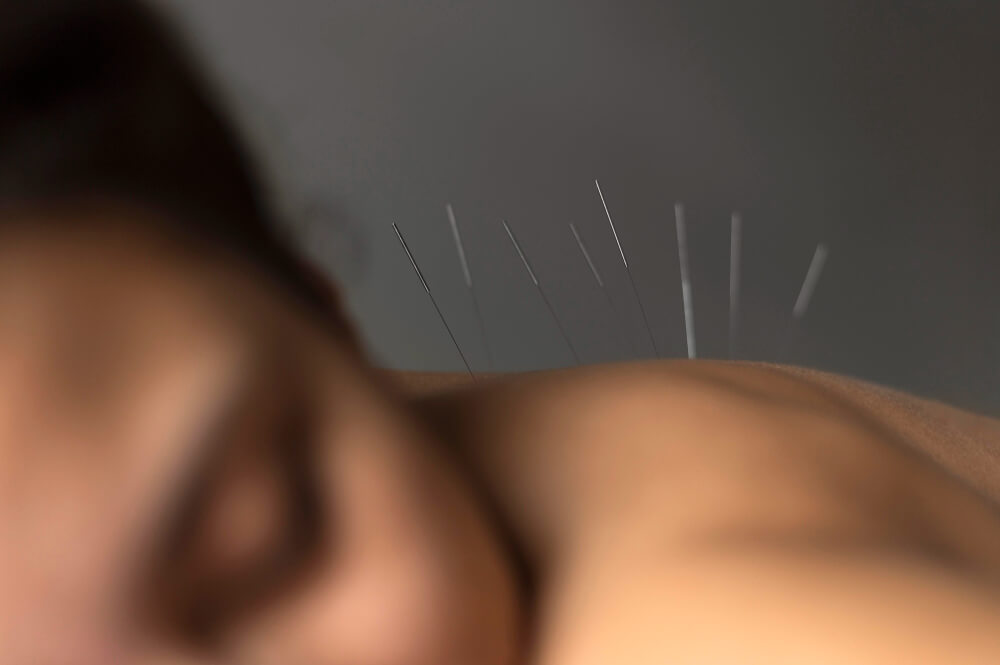
During dry needling, a physiotherapist inserts a sterile filiform needle into the targeted tissue. In some cases, the needle produces a brief local twitch response, an involuntary muscle contraction followed by relaxation.
This response is one proposed mechanism through which dry needling may influence muscle sensitivity and movement. Other proposed effects include changes in local circulation and pain-processing pathways. However, the precise mechanisms are still being investigated, so claims that dry needling literally “resets” a muscle should be treated as a simplified explanation rather than an established physiological fact.
Research on dry needling for low back pain suggests it can provide short-term improvements in pain and disability, particularly when used alongside other rehabilitation approaches. Evidence for longer-term superiority over other treatments remains less certain.
How Traditional Acupuncture Works
Traditional acupuncture uses specific acupuncture points selected according to the practitioner’s assessment. In TCM, these points are understood in relation to Qi and meridian pathways.
Modern clinical research approaches acupuncture from a different physiological perspective, examining possible effects on the nervous system, pain modulation, and other biological responses.
Acupuncture may be considered for people experiencing chronic pain, headaches, stress-associated muscle tension, or other conditions for which acupuncture is clinically appropriate. Expert Care Physio offers acupuncture as part of its broader rehabilitation approach and notes its use for conditions including low back pain, headaches, fibromyalgia, and musculoskeletal problems.
Dry Needling vs. Acupuncture: At a Glance
| Feature | Dry Needling / IMS | Traditional Acupuncture |
| Clinical origin | Western musculoskeletal therapy | Traditional Chinese Medicine |
| Main treatment target | Trigger points and painful muscle tissue | Selected acupuncture points |
| Primary framework | Anatomy, movement and neuromuscular function | TCM framework plus modern pain science |
| Typical sensation | Local twitch, brief ache or cramp | Often mild pressure, tingling or warmth |
| Common application | Myofascial pain and muscular restrictions | Pain management and broader conditions |
| Long-term results | Best supported when combined with rehabilitation | Benefits vary by condition and patient |
The evidence does not support declaring either approach universally superior. For chronic low back pain, acupuncture has demonstrated benefits compared with no treatment or sham treatment, while dry needling can also be useful as an adjunct to other therapies. (Cochrane)
Dry Needling for Athletes and Desk Workers
The treatment choice becomes particularly relevant when muscle tension is associated with repetitive activity or sport.
Runners may develop persistent tightness around the gluteal muscles, hamstrings, or piriformis region. Athletes involved in strength training may experience muscular restrictions around the shoulders, hips, or upper back. Desk workers can develop sustained tension around the upper trapezius, neck, and shoulder blade region.
In these situations, Intramuscular stimulation Kanata may be incorporated into a broader rehabilitation program. Expert Care Physio describes dry needling as a treatment for myofascial pain and musculoskeletal dysfunction and recommends combining it with stretching and strengthening as part of recovery.
The goal should not be to rely on a needle treatment alone. Exercise, movement retraining, manual therapy, load management, and other physiotherapy interventions can address the factors contributing to recurring symptoms.
Does Dry Needling Hurt Compared to Acupuncture?
The experience can be different.
Traditional acupuncture is often associated with a mild sensation such as pressure, tingling, warmth, or heaviness. Some patients feel very little during needle insertion.
Dry needling can produce a more noticeable response when a trigger point is targeted. Patients may experience a brief deep ache, twitch, or cramping sensation. Temporary muscle soreness afterward is also possible.
Neither treatment should be assumed to be completely painless, and individual responses vary. A qualified practitioner should explain what you may feel and adjust treatment according to your tolerance and clinical needs.
Frequently Asked Questions
Is dry needling better than acupuncture for back pain?
Not universally. Dry needling may be useful when back pain has a significant myofascial trigger-point component, while acupuncture can help some people with chronic low back pain. Current evidence does not establish one treatment as consistently superior for every patient.
Can dry needling help sciatica?
Dry needling may sometimes be incorporated into treatment when muscular restrictions contribute to symptoms around the hip or lower back. However, sciatica can have different causes, so assessment is important before selecting IMS therapy for sciatica.
What are the benefits of dry needling for athletes?
For athletes, dry needling may help manage localized muscular pain and trigger-point sensitivity. Its greatest value is generally as part of a broader rehabilitation plan involving appropriate strengthening, mobility work, movement correction, and gradual return to activity.
Does dry needling hurt more than acupuncture?
The sensation varies by person and treatment target. Acupuncture may feel like mild pressure or tingling, while dry needling can cause a brief twitch or deeper ache when a trigger point is stimulated. Your physiotherapist can adjust treatment based on your response.
Choosing the Right Treatment for Your Symptoms
If you’re comparing dry needling vs acupuncture for back pain, the most useful question is not simply which treatment is “better.” It is which approach matches the source, pattern, and goals of your pain.
Expert Care Physio provides both Dry Needling and Acupuncture, alongside comprehensive Physiotherapy and rehabilitation services. Its clinics serve patients in Kanata and Nepean, including locations on Eagleson Road, Hazeldean Road, and Strandherd Drive.
If persistent muscle tension, back pain, athletic tightness, or recurring symptoms are affecting your daily activities, schedule an assessment with the Expert Care Physio team. A clinical evaluation can help determine whether dry needling, acupuncture, physiotherapy, or a combination of treatments is appropriate for your individual needs.